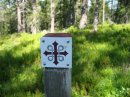
As this is my last Tuesday in Pau I signed up for a guided walk put on by the Tourist Office. It was my third visit to Lescar this year, or fourth if you count Decathlon on the outskirts, but there are still fresh delights to discover and more to learn about those I already knew. I bought snd stamped a Carnet de Pèlerin from the Tourist Office in preparation for my next Camino.
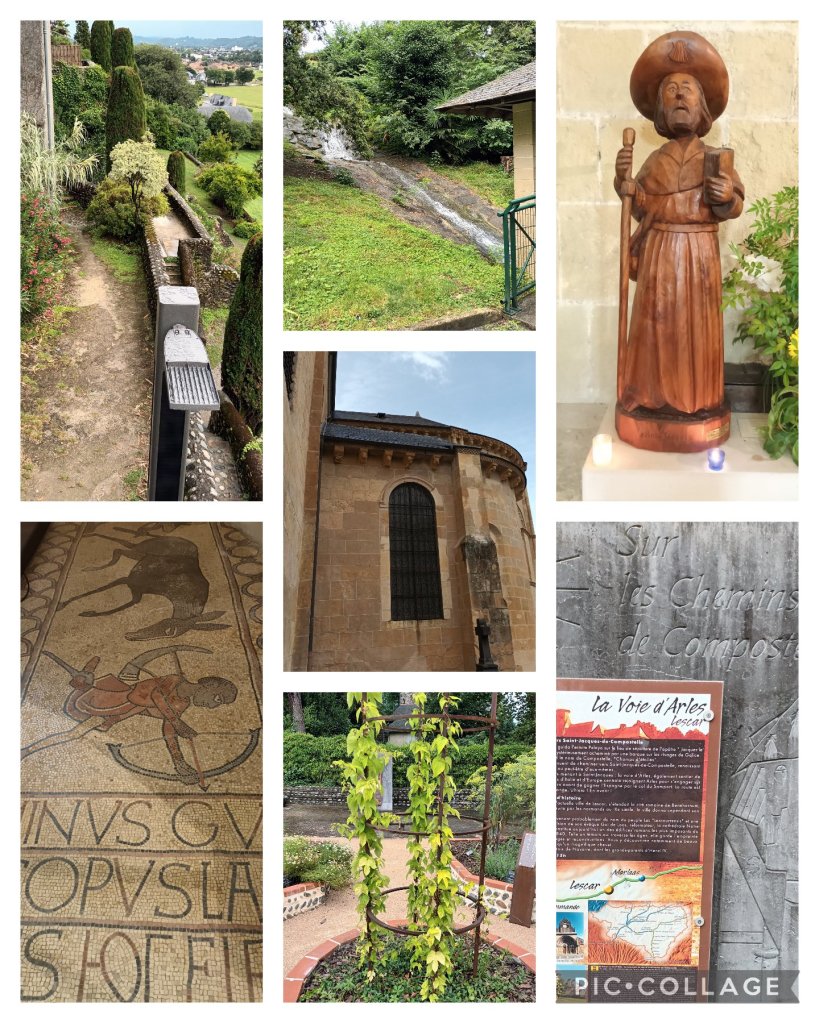
The Romans founded a city here in the first century. Parts of the ramparts (top left) date from the Vth century, and the establishment of a cathedral from the early VIth, a century earlier than the first English dioceses. The current Cathedral was built in the XIth and XIIth centuries, though the crypt and cloister disappeared when the kingdom of Béarn became Protestant. The mosaic floor (bottom left) shows a Moorish hunter with an artificial leg, the earliest example of a prosthesis in European art). A garden in the medieval style (bottom centre) has been constructed by the ruins of the Bishop’s Palace (later a prison with an impressive oubliette), and contains a reminder that Lescar lies on the Voie d’Arles, one of the four mediaeval routes to Santiago crossing France (bottom right). Below the garden, steps descend to the valley of the Lescourre (top centre), which I had time to explore before catching a bus back to Pau.
 emeritablog: life after work