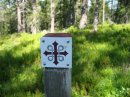
Just over 20 years ago, I arrived in Le Puy en Vélay to walk the first part of the Via Podensis, the best-known of the medieval pilgrimage routes through France to Santiago de Compostela. It took me nearly four years, and four further visits to the Camino ranging from 3 days of walking to 3 weeks, to complete the journey.

I’ve been thinking for a few years about another Camino walk – “camino” is a Spanish word for a way or route, but “The Camino” usually refers to one of the long-distance footpaths ending in Santiago. There were four such trails through France in the Middle Ages:
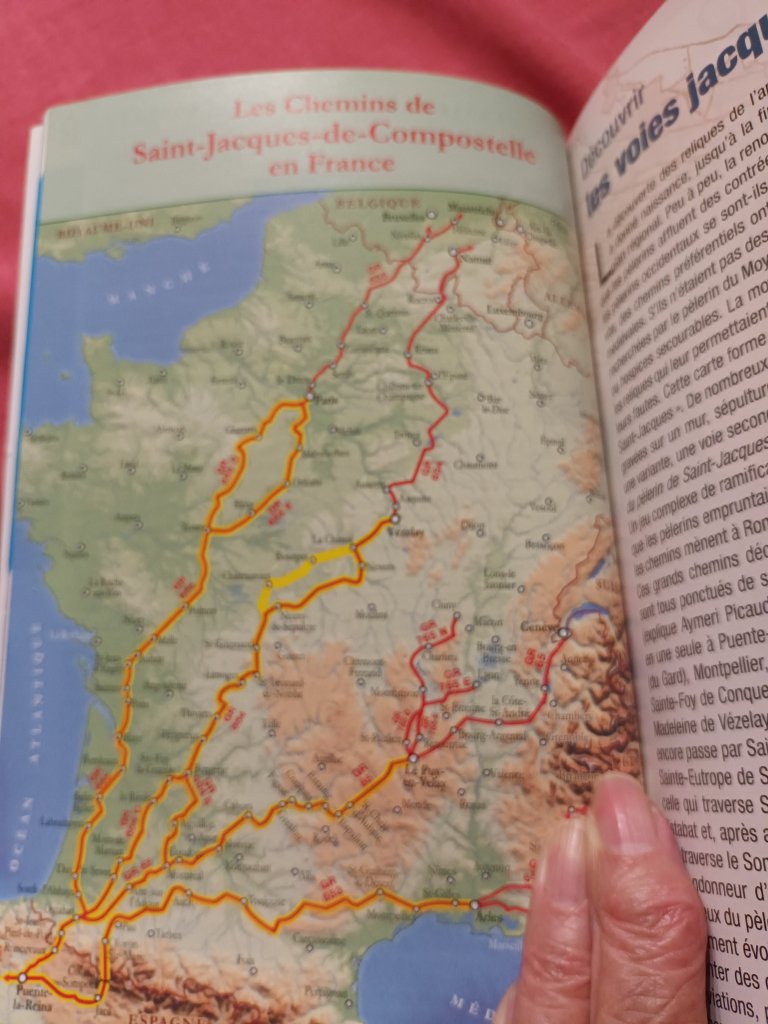
From left to right, west to east
Pilgrims from Paris could travel through Tours;
Or go south to Vézelay, a shrine dedicated to Mary Magdalene, and join Pilgrims from Belgium to make their way south-west;
From Germany and Switzerland, the route went through Le Puy en Vélay, where Pilgrims from Lyon would join them;
And Pilgrims from Italy and the South of France would travel through Arles and Toulouse, and meet the other three groups only at Puente la Reina, after crossing the Pyrenees. Four of my last five posts were about some day walks along this route, the Voie d’Arles or Via Tolosana.
Finding myself with a non-refundable Eurostar ticket to Paris, I decided to start there, and finish at Le Puy, where my first walk had started. I got hold of a guide book with maps, directions, and lists of places to stay, and this is the route it will take me:
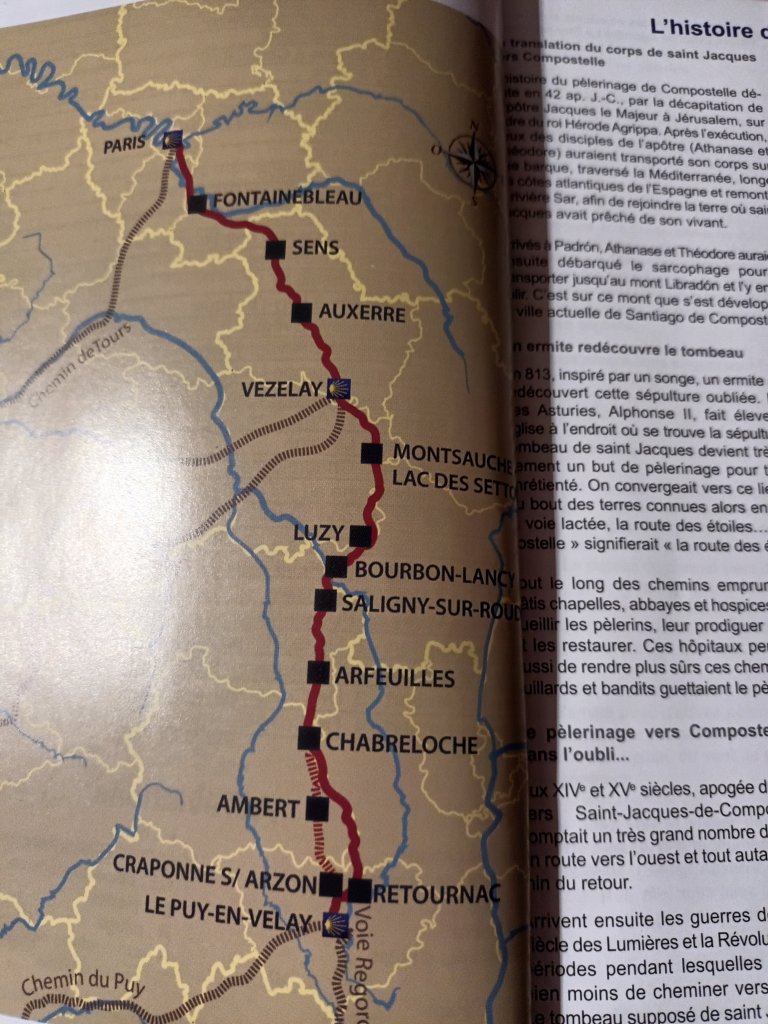
The broken red line alongside the Southern stretch of the main route is an easier alternative for winter journeys. I shall decide whether to take in when I get there. The broken black lines from Le Puy are the main path
to Santiago, and, southbound, a trail based on Robert Louis Stevenson’s Travels with a Donkey.
So much for an introduction. Up early tomorrow to head for St Pancras, and I’ll be in Paris by lunchtime.
 emeritablog: life after work