Bansko, Gorno Draglishte, Dobarsko
Bansko
We had stayed the night in Bansko, best known as a skiing resirt. St Mary’s Church was built in the mid 19th century behind a stone wall, so that the Turks would not know what was going on. Again, the walls were covered in paintings, and I particularly noticed representations of the Raising of Lazarus. Other unusual features were an elaborate pulpit (rarely used) and more chairs than usual in an orthodox church, in rows perpendicular to the iconostasis.
We also visited a “museum house” of a rich merchant, but I don’t remember much about it. These houses furnished in period style no doubt had some historical interest, but I was fighting against information overload and found them a distraction from the theme of pilgrimage.
Surprise!
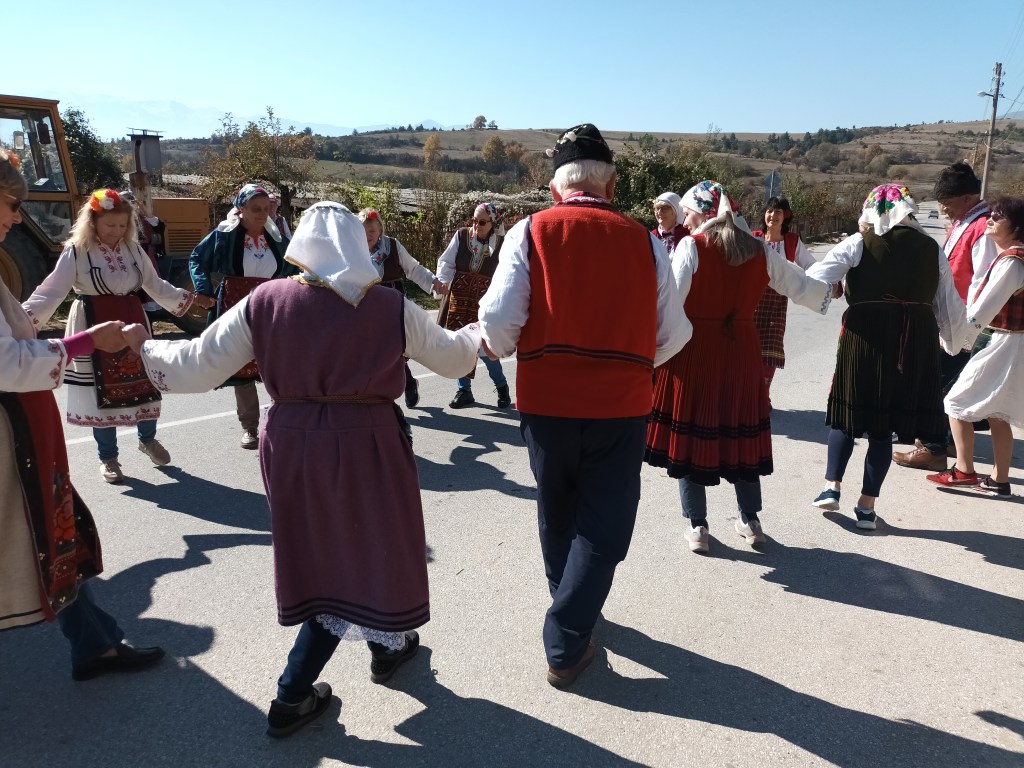
We stopped outside a house in a small village, to be greeted by women in national dress. They ushered us, one at a time, into a room full of costumes, and dressed us up! When everyone was ready, and had their photos taken, we were invited to join our hostesses dancing in the road outside.
Then we removed our costumes and sat down to lunch prepared for us by our hostesses: onion tart with salad, chicken and roast potatoes, and another slice of pumpkin.
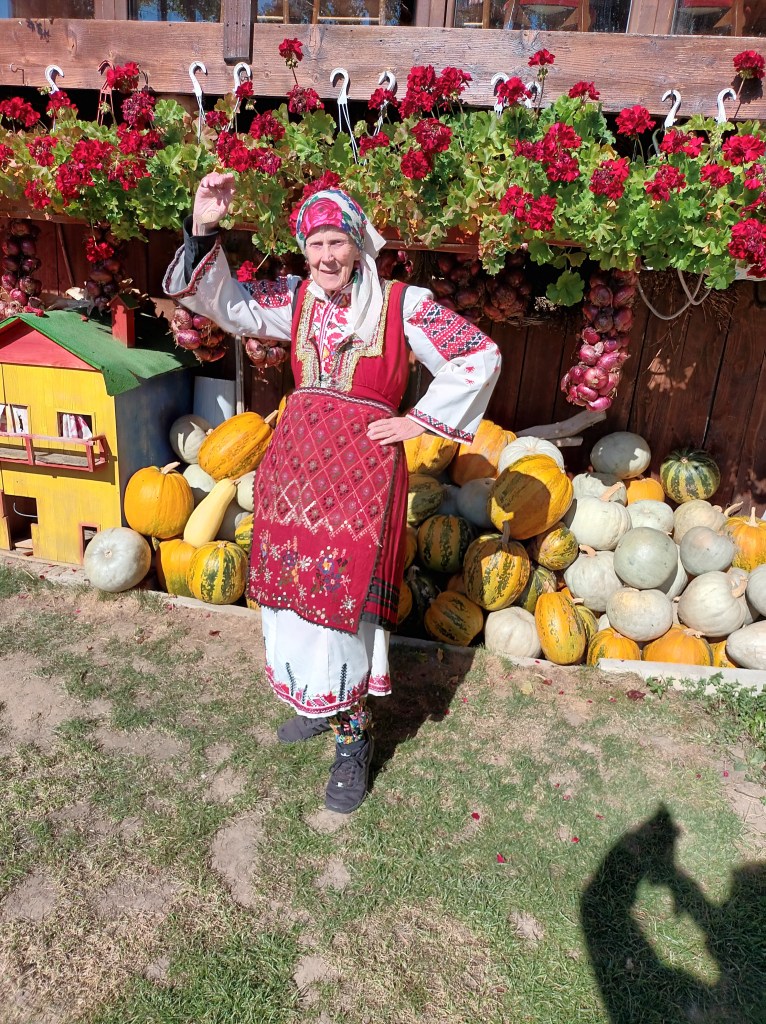
Dobarsko
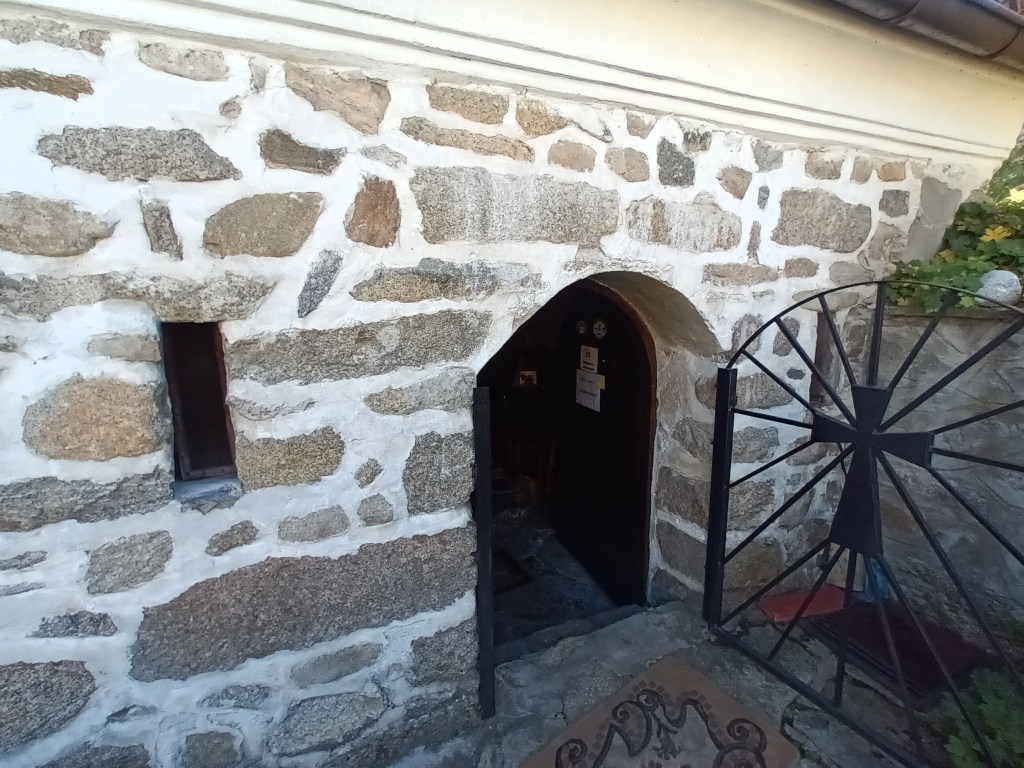
The last stop of the day was in the church of the “two Theodores” in Dobarsko. The frescoes date from about the XVIth century, but the narrow look much older. They reminded me of the slots in castle walls for shooting arrows against invaders, though I doubt if that was the purpose here.
The church is no longer used for worship in case candle smoke damages the frescoes which were described as “some of the finest examples of religious art in Bulgaria.” But of course no photography was allowed.
 emeritablog: life after work