Plovdiv and Bachkovo
Plovdiv
Our hotel, as usual, was some way out of the centre. Feeling frustrated by the lack of collective worship, I went for a walk around the block where I could sing hymns without disturbing anyone.
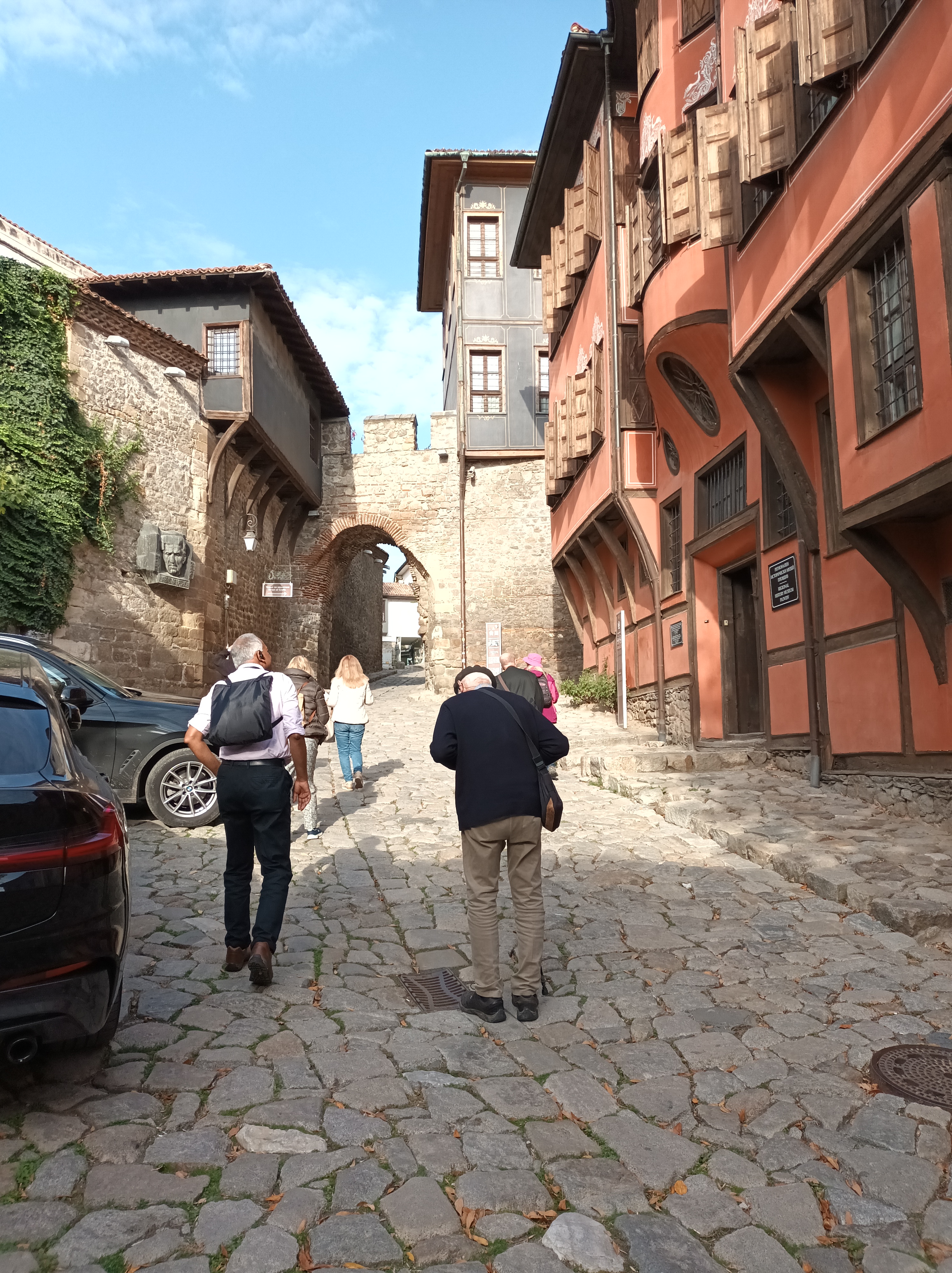
We drove to the edge of the Old Town, with cobbled streets, and visited the ethnographic museum, in a house built for a rich Armenian merchant, and the church of SS Constantine and Helena.


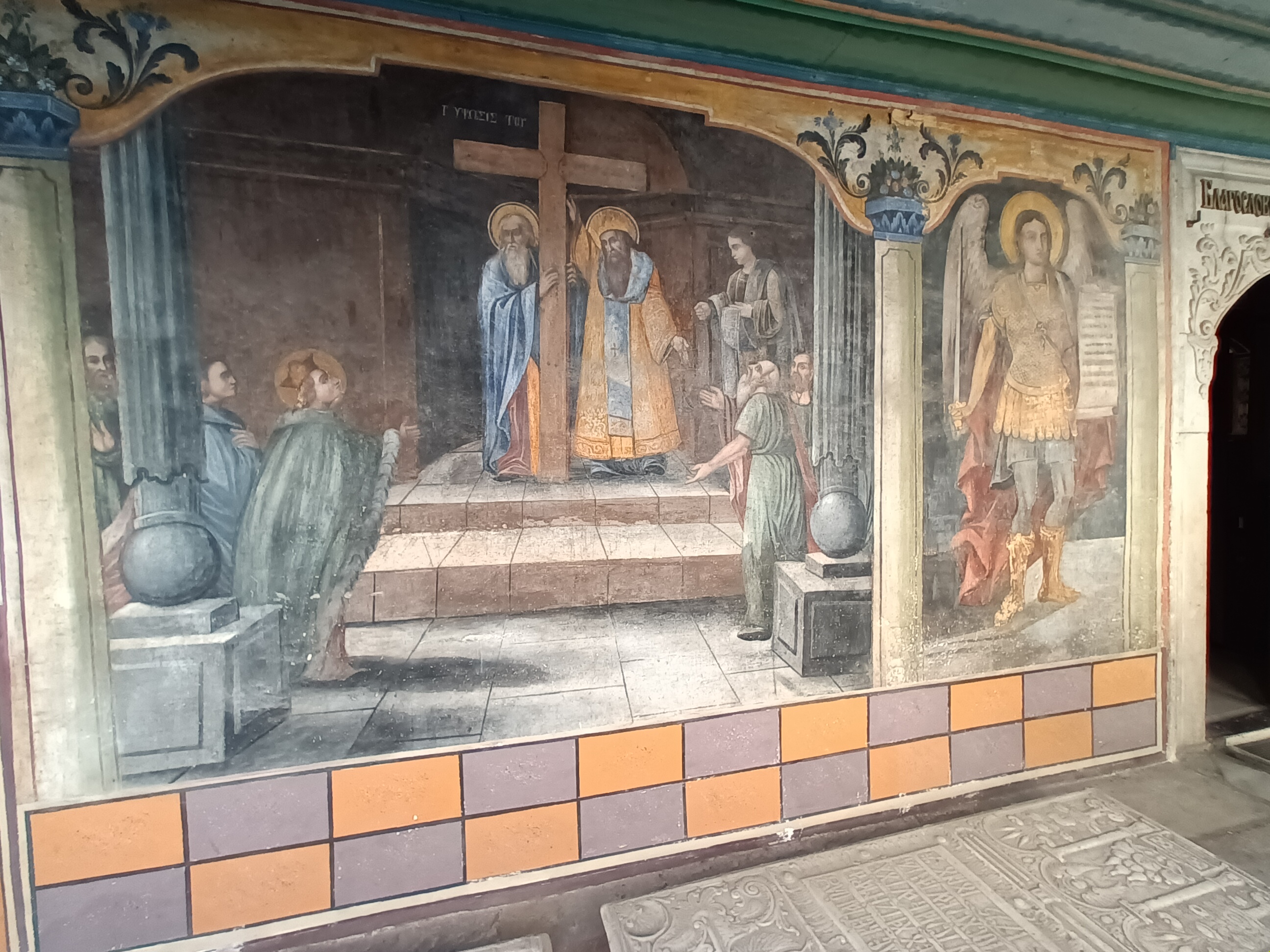
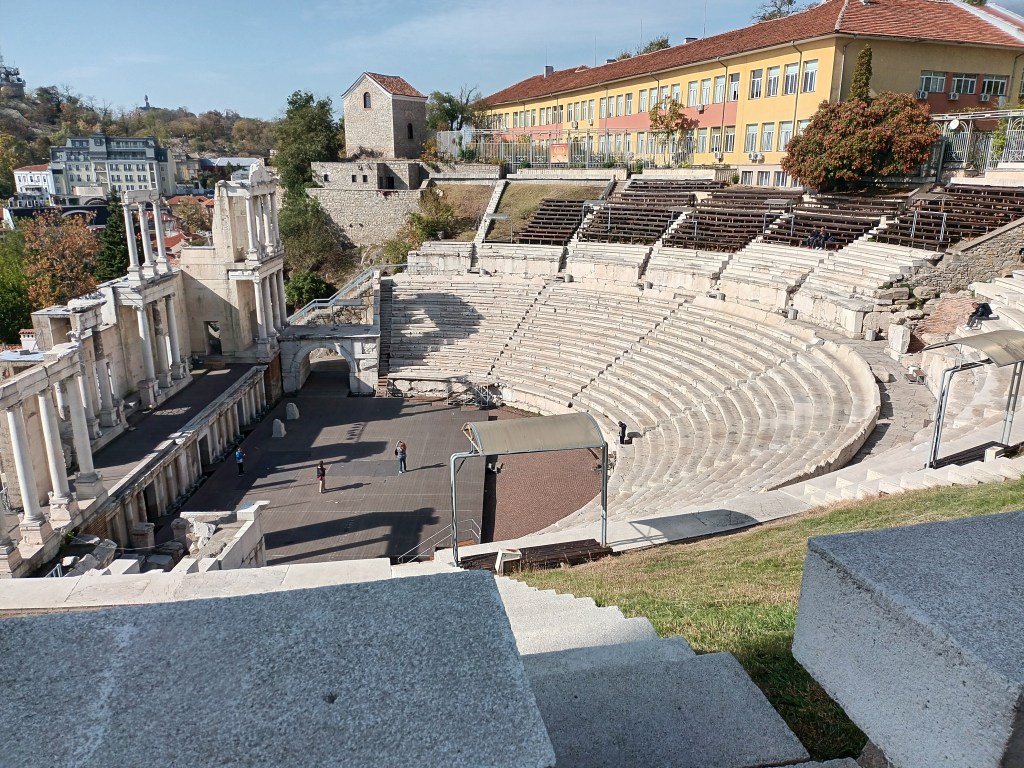
Plovdiv is much older than the Old Town, however. The amphitheatre was apparently discovered, more or less intact, under a heap of earth and rubble having been forgotten about for centuries, and is now used for performances, though one of our group who walked down to the stage to test the acoustics failed to attract our attention.
A work in progress is the opening up of the ancient stadium, mostly buried under a shopping precinct, as an underground museum.
With an hour and a half free time, I visited the Cathedral Church of the Assumption of the Blessed Virgin Mary (quite a common dedication in Bulgaria), where I prayed my way round the icons in peace and at my own pace before returning to the shopping precinct in search of lunch.
Bachkovo
A short coach journey this time, as the second largest monastery in Bulgaria is only 30 minutes’ drive from the centre of Plovdiv. We approached it by walking up a road lined with stalls. Plenty of opportunity for shopping on the way back!
It was founded in the XIth century by two brothers from Georgia, rebuilt after a fire in 1604, and decorated in Bulgarian Revival style in the XIXth century.
The monastery treasure is a very old icon, probably from the first millennium, given to them in 1311. It had been hidden in a cave for safekeeping, forgotten, and rediscoved. Every Easter Monday, there is a procession to the cave.
While the others headed for the market stalls, I walked up the path to a small chapel; is this on the site of the cave, or does the path go further?The centre left picture shows three young people making their way up the path.

 emeritablog: life after work